
From tablecloth to peplum top
Written by Holly Chamberlain
As little as 10-30% of clothing donated to Uk charity shops are actually resold. The rest is packed up and exported to counties like Ghana, Kenya and Tanzania, where the clothes are sold in markets, recycled or (most often than not) disposed of in large landfill sites. Fast fashion consumption has reached unprecedented levels, leading to 92 million tonnes of textile waste being produced globally, every year. This is why it is more important than ever to find new ways to reduce your personal textile consumption habits and change the direction that this industry has taken.
Now, I’m not going to stand here and say that I haven’t partaken in fast fashion. Because I have. However, recently I have become educated in the devastating effects that the fashion industry has had and continues to have on our planet. In the past, I have been ignorant to how my habits effect the earth but as I have grown older and more knowledgeable, I have become passionate about driving change within the industry.
One of the many small changes I love to make is through upcycling. My favourite upcycling project I have done was using an old, embroidered tablecloth to make my own, one of a kind peplum top. The pattern I made produced a very small amount of waste which I kept for future projects. Here is an overview of how I made it:
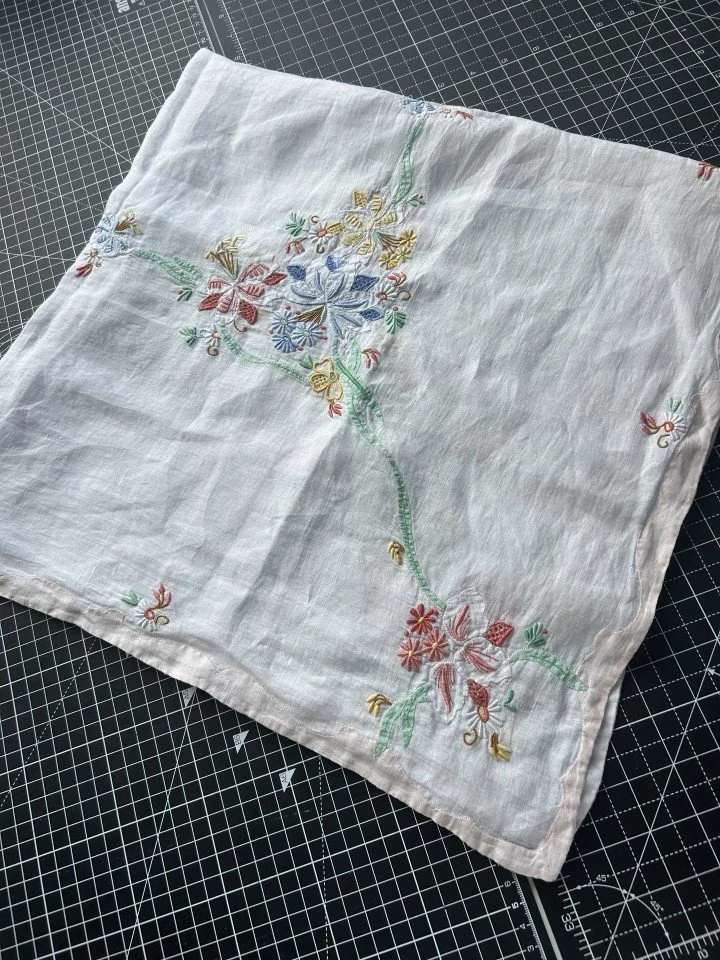
The Perfect fabric
I found this gorgeous embroidered table cloth in a charity shop with the original intention of it becoming a skirt. However, after some designing and measuring I figured it would be better suited to a peplum style top.
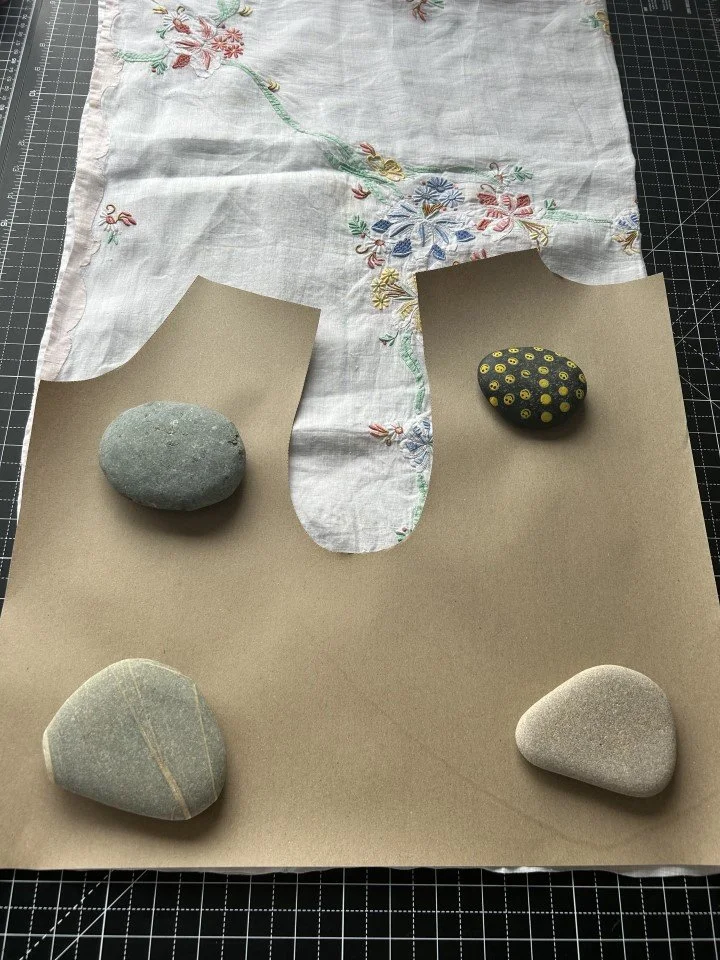
Making the pattern
I made the pattern using an existing bodice block and the measurements worked perfectly with the width of the fabric. Aligning it strategically, I cut all the pieces out.
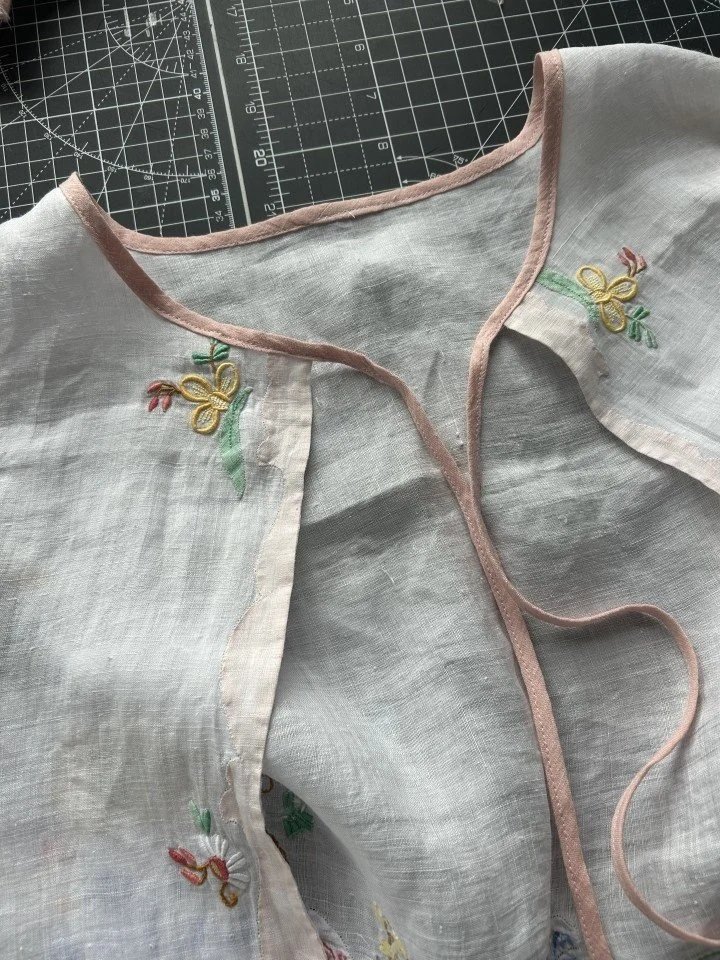
Binding the edge
Using some left over fabric from a previous project, I made bias binding to encapsulate the edges and create ties at the front.
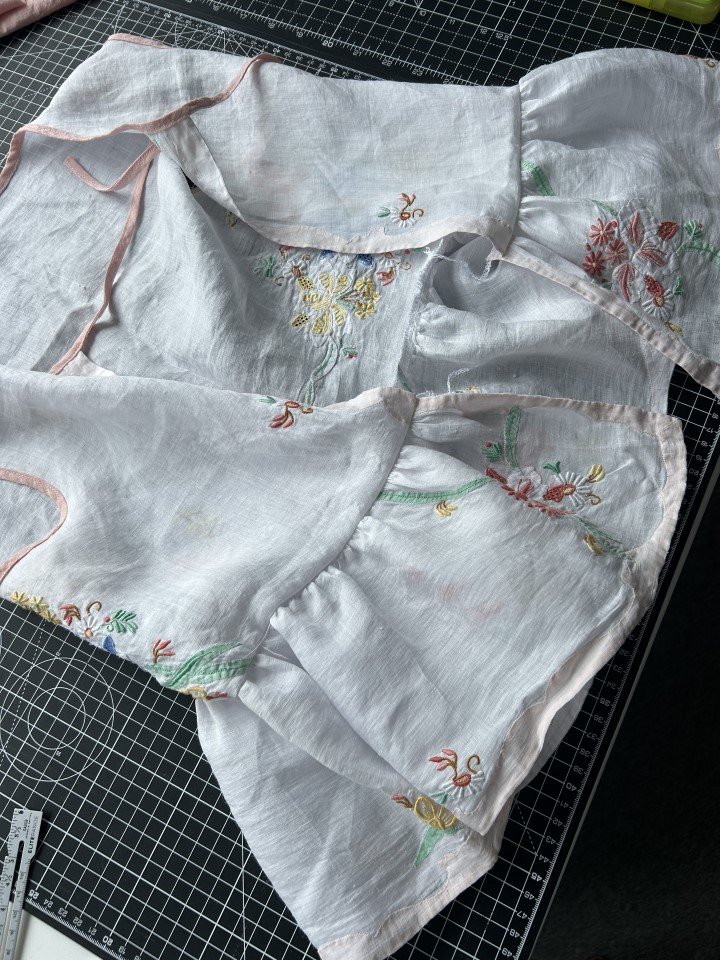
Adding the gathered edge
Using the left over fabric from the top and bottom of the table cloth, I made a gathered peplum.
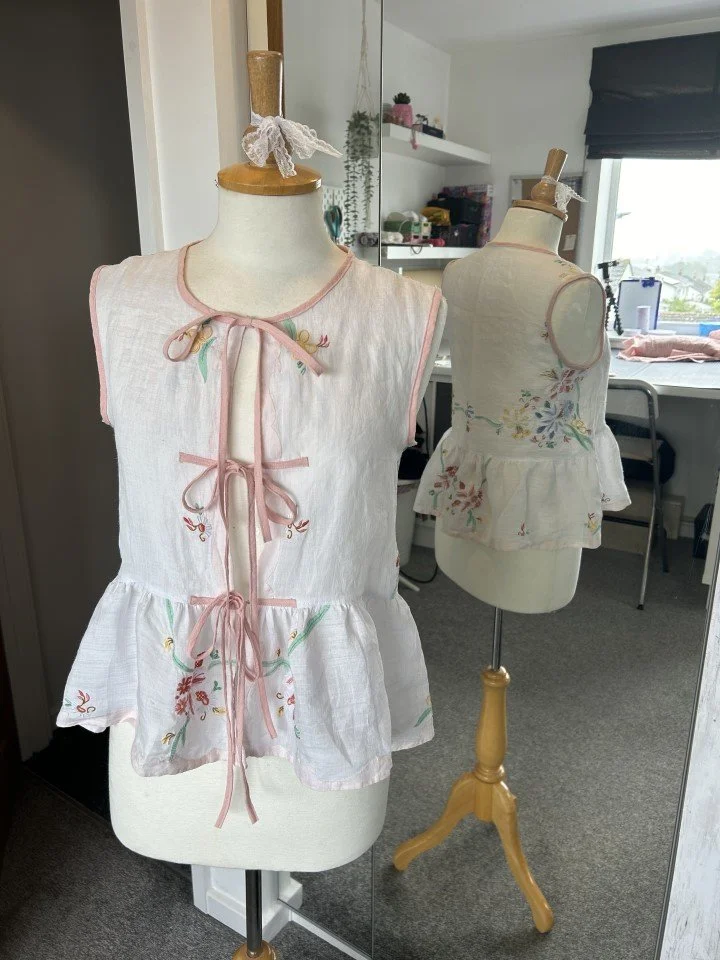
The result
I added the finishing touches, topstitching binding and ironing the seams. It had turned out perfectly.
Making your own clothes is an excellent way to reduce your fast fashion consumption. Learning the effort and care it takes to make a garment, has made me more appreciative of each item I wear every day and much more mindful when it comes to shopping fast fashion. Before you buy an item of clothing, think, Does the price of this item reflect the effort that likely went into making it? Do I like this enough to make it myself? What value is this providing me, do I like it because it is trendy or do I like it because I genuinely need it? Is it going to fulfil that need for a long time?
I hope this blog has inspired you to think more consciously when shopping for new clothes. If you are interested in learning how to make your own clothes like me, please check out my Events and Workshops page for more details on how to book one-2-one and group workshops with me where you can learn everything from sewing basics to drafting your own patterns.
Sources:
Rodgers, L. (2015) Where do your old clothes go?, BBC News. Available at: https://www.bbc.co.uk/news/magazine-30227025 (Accessed: 12 February 2026).
Unsustainable fashion and textiles in focus for International Day of zero waste 2025 (2025) UN Environment Programme. Available at: https://www.unep.org/news-and-stories/press-release/unsustainable-fashion-and-textiles-focus-international-day-zero (Accessed: 12 February 2026).